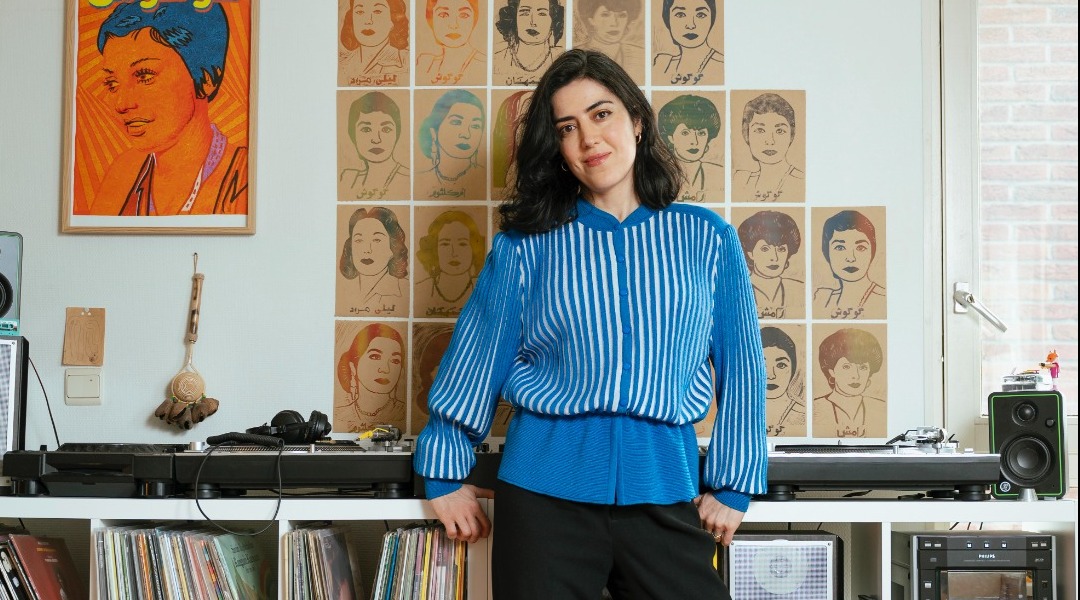

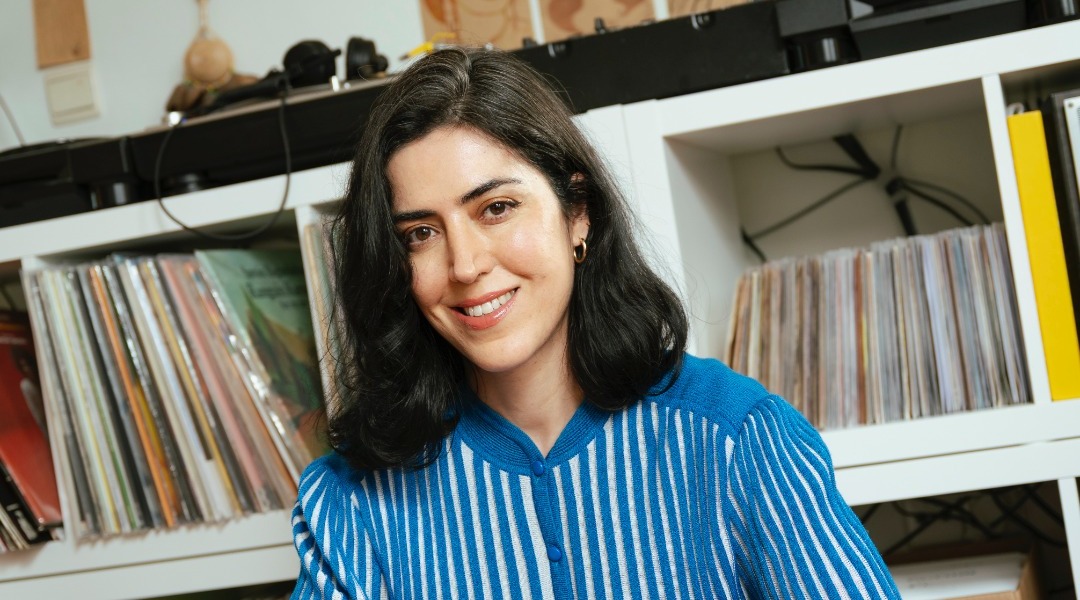
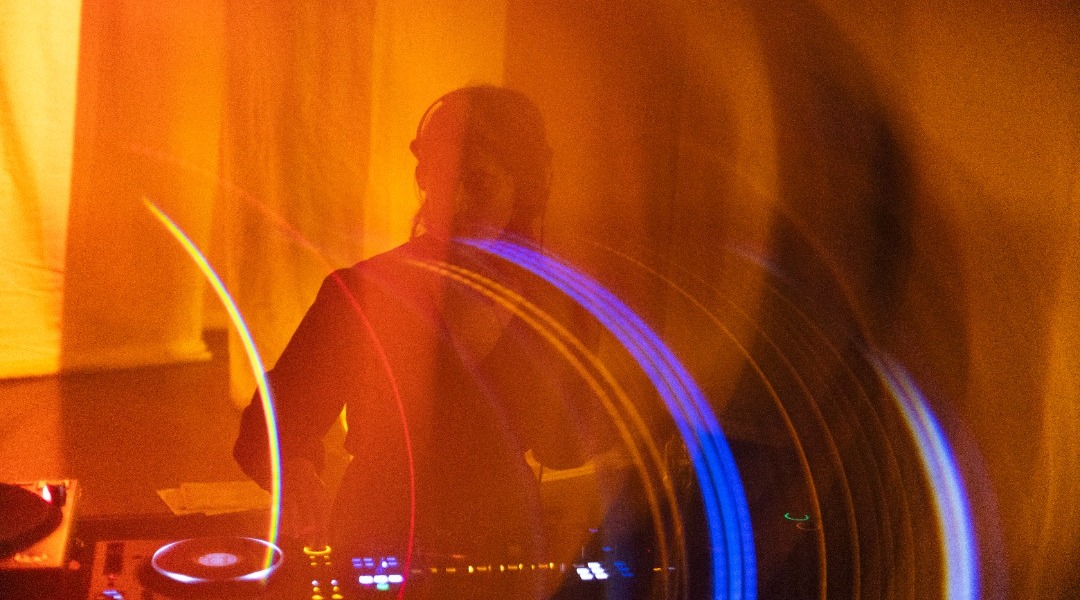
On Sunday 4 October, Amsterdam-based DJ, selector and cultural researcher Katayoun brings Iran – The Golden Eras to Haarlem Vinyl Festival. Through a selection of records, she will guide the audience from the golden era of Iranian vinyl in the 1970s to the diasporic music industry that developed in Los Angeles from the 1980s onwards.
Katayoun’s work brings together DJing, radio, research and archiving. Her shows Female Vocalists from Iran and Beyond and Sonic Imaginaries uncover overlooked musical histories while connecting Iran’s sonic heritage to wider regional and global traditions. Her own collection focuses particularly on Iran’s pre-1979 vinyl era and the Tehrangeles scene that emerged within the Iranian diaspora in Los Angeles.
These histories form the basis of her session at HVF. The 1979 Revolution created a profound rupture in Iran’s music industry, changing how music was produced, circulated and perceived. By moving between records made before and after this moment, Katayoun explores how the country’s musical culture continued to evolve both inside Iran and across the diaspora.
Each selection opens another part of that story: who created the music, where it travelled and what it reveals about the social and cultural environment around it. The listening session concludes with a Q&A, opening the conversation further into questions of music, memory and cultural identity.
The records featured in the session also carry a more recent story. While transporting part of her collection, Katayoun faced difficulties getting the records across the Turkish border, leaving their fate uncertain for a period of time. She was eventually able to get them across, supported throughout the experience by donations and messages from the wider vinyl community. The situation added another layer to her relationship with the collection as a cultural archive worth preserving.
Ahead of the festival, we spoke with Katayoun about the journey she is preparing, her relationship with her records and what she hopes audiences will hear beyond the music itself.
What kind of listening journey would you like to take the audience on during this session?
"One that is rich and immersive, and hopefully also surprising and full of discovery. Come and find out."
Your work moves between collecting, archiving, DJing and storytelling. How do you decide what to bring into a listening session?
"I guess that, before everything else, I am a curator and a selector. The journey through the music is where I start. I want people to immerse themselves in the music first, and then discover the stories, histories and unexpected connections that unfold through listening.
This session may be a bit more educational and informative. I want to share a wide variety of music while telling the story of the 1970s, the golden era of vinyl in Iran, as well as the evolution of the Iranian music industry in Los Angeles from the 1980s onwards.
The 1979 Revolution created a profound rupture in Iran’s music industry, fundamentally reshaping how music was produced, circulated and perceived. Getting into parts of that history allows us to hopefully hear the music before and after that moment in a much more layered way."
After everything that happened with your record collection, do these records feel different to you now?
"Yes and no. These records have always been very special to me, but of course I had a real scare of losing them. It has been stressful dealing with this situation alongside everything that continues to unfold in and around my country of origin.
Losing these records would have been upsetting, as they are the result of years of collecting and are important cultural heritage artefacts. I am very aware of how lucky I have been to get them across the Turkish border, but that feeling only came after a period of real worry and uncertainty.
I knew I had to save them, and at the time it felt like the most important mission I had ever been on."
What has this experience taught you about the fragile life of records and the community around them? What does it mean to care for records that carry cultural memory?
"This experience taught me that the wider vinyl community is incredibly caring and supportive. So many people I had never even met before donated, reached out with messages of encouragement and showed such kindness. That generosity genuinely carried me through it.
Experiences like this remind me that there are wonders in the world, that I am not alone in this journey and that this work moves through many ears and hearts far beyond my own. It showed me that my work is appreciated and has a supportive following far beyond what I can normally see or encounter."
What would you like people to hear beyond the music itself during this session?
"I hope people hear how the history of Iranian music tells the history of the country itself, and how those histories are reflected in music made both inside Iran and across the diaspora.
I would argue that music is one of the art forms, alongside poetry, most deeply shaped by—and in turn shaping—the country’s social and cultural environments, both past and present."
In Katayoun’s session, the records become entry points into the people, places and circumstances that produced them and into the histories that continued to unfold after they left Iran.
Iran – The Golden Eras by Katayoun
Date: Sunday 4 October 2026
Time: 12:30–13:30
Location: PHIL, Warmerdamzaal
Admission: Free
Supported by Podiumkunst.net